Looking Beyond the Obvious in Sourcing
Updated: Aug 18
Not everything in a space should come from a showroom.
Some of the most important pieces are those that are found along the way. They carry a sense of history or irregularity. There are clues to where they've been.
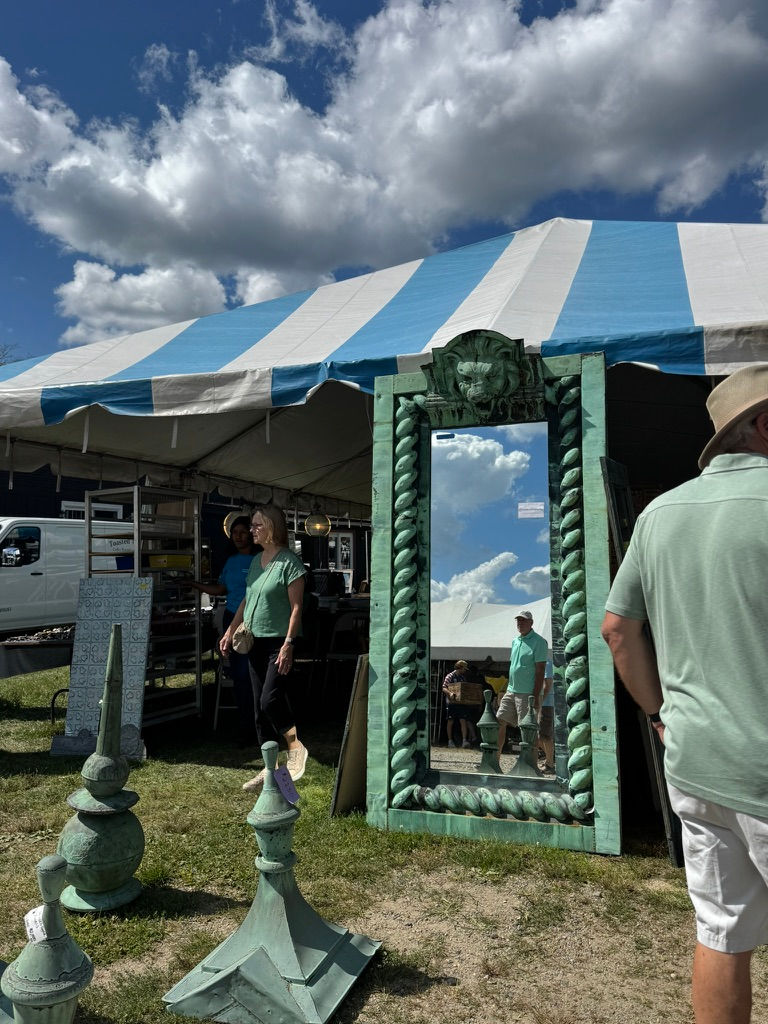
I spend a lot of time looking for those pieces. Brimfield, local antique shops, consignment stores, Facebook Marketplace. It’s not always efficient, but that’s part of it. Often, you’re not looking for something specific as much as recognizing the right thing when you see it.
There’s a difference between something that is new and something that has already lived a life. You can see it in the patina, the way something has aged over time. Those qualities are difficult to replicate, and they change how a space feels.
Not everything has to be old or rare. I use accessible pieces where they make sense. But without those more specific elements, a space can start to feel flattened.

Part of the process is also knowing how to use what already exists.
Not everything needs to be purchased. Sometimes the most meaningful pieces are already there, just not being seen clearly.
A scarf that never gets worn can be framed. A fragment of wallpaper from a renovation can become part of a composition. Objects collected over time can be arranged in a way that gives them more presence.
These are often the pieces that make the room impossible to duplicate.
For me, sourcing is less about filling a room and more about finding the elements that give it character.
The best rooms don't tell you where everything came from. They make you curious enough to ask.


Comments