
Interior Design Philosophy
Interiors are felt before they are understood
Long before we notice individual objects, we respond to the feeling a room creates.
Beyond Decoration


My interior design philosophy is rooted in discernment.
Before beginning any project, I consider many factors. What already exists, the history of the home, and the objects that inspire you.
Not everything needs to be added.
Sometimes the most creative work is in uncovering what is already there. Whenever possible, these elements are not replaced - but reinterpreted in a way that invites deeper conversation.
Material. Craft. Tension. Composition. Light.
These are the conversations every room is already having. Every decision either strengthens or interrupts them.
on MATERIAL
Material is one of the first things we feel, even when we don't consciously notice it.
Tile or wood underfoot. The weight of a handle. How a surface holds or reflects light.
The curve of a wood grain. Veining in marble. Textiles that show wear over time.
Material quietly determines whether a room feels convincing.

on CRAFT
Craft is an expression of care.
Materials are cut, joined, shaped, and refined through careful attention, where each adjustment brings greater clarity to the whole.
I value those who take pride in doing things well and materials that ask for that level of care.
There is something enduring in the way a piece is built, in the restoration of what already exists, in the attention it requires to do it well.
Good craftsmanship honors the material.


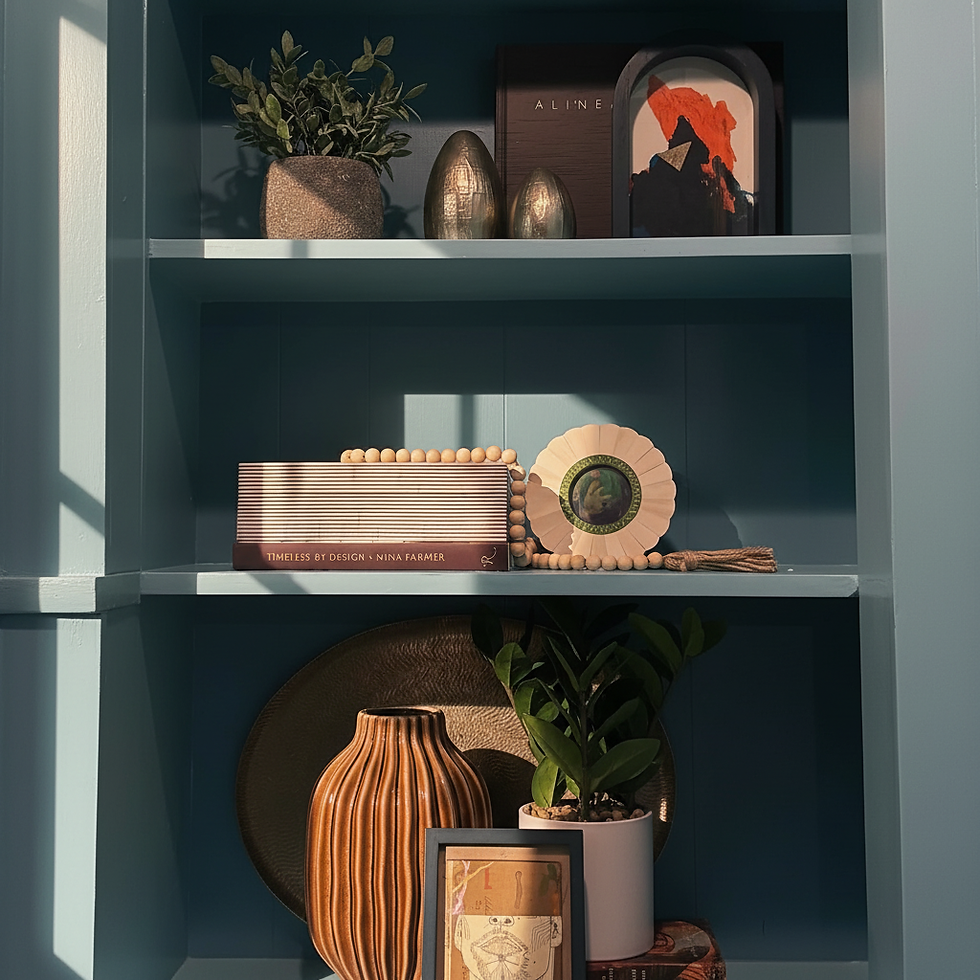

on Tension
Relationships give each element greater meaning.
Sometimes the smallest contrast changes everything.
A contemporary silhouette carved from marble.
A single fearless spark of color within an otherwise restrained palette. It is often one unexpected relationship that draws the entire composition into sharper focus.
The
COMPOSED WALLS
Collected rather than constructed.
Compositions that feel effortless are the result of experimentation and adjustment.
Nothing is placed without asking what it adds to the conversation.
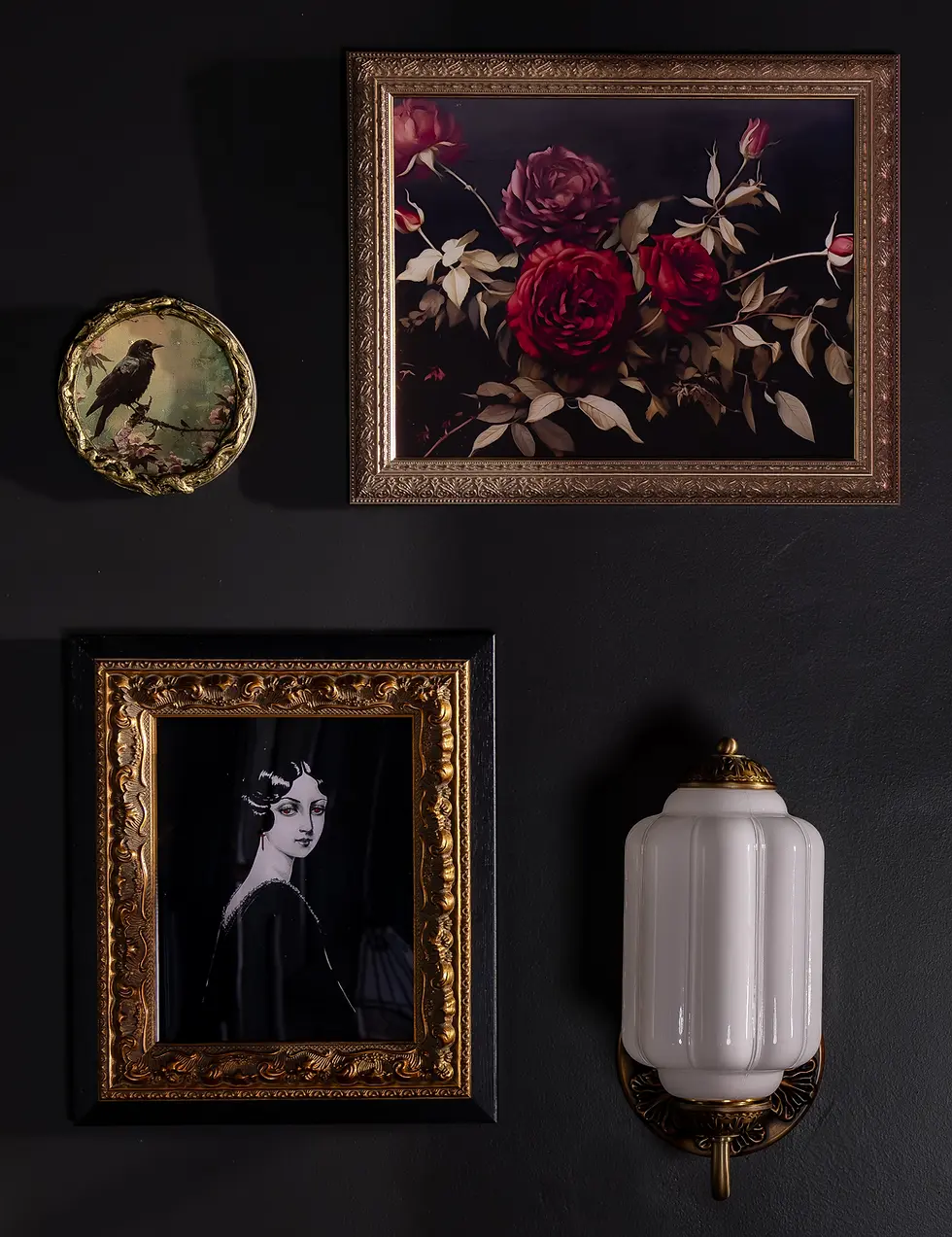

Before a single nail goes into the wall, every composition is studied for scale, rhythm, spacing, and balance.


LIGHT as ATMOSPHERE
It directs attention, and in doing so, defines how a space is experienced.
It softens edges, deepens shadows, and reveals nuances of material. Depending on how the light
moves across it, the same surface can feel flat in one moment and quite dimensional in another .
Light reveals what materials are capable of.


